
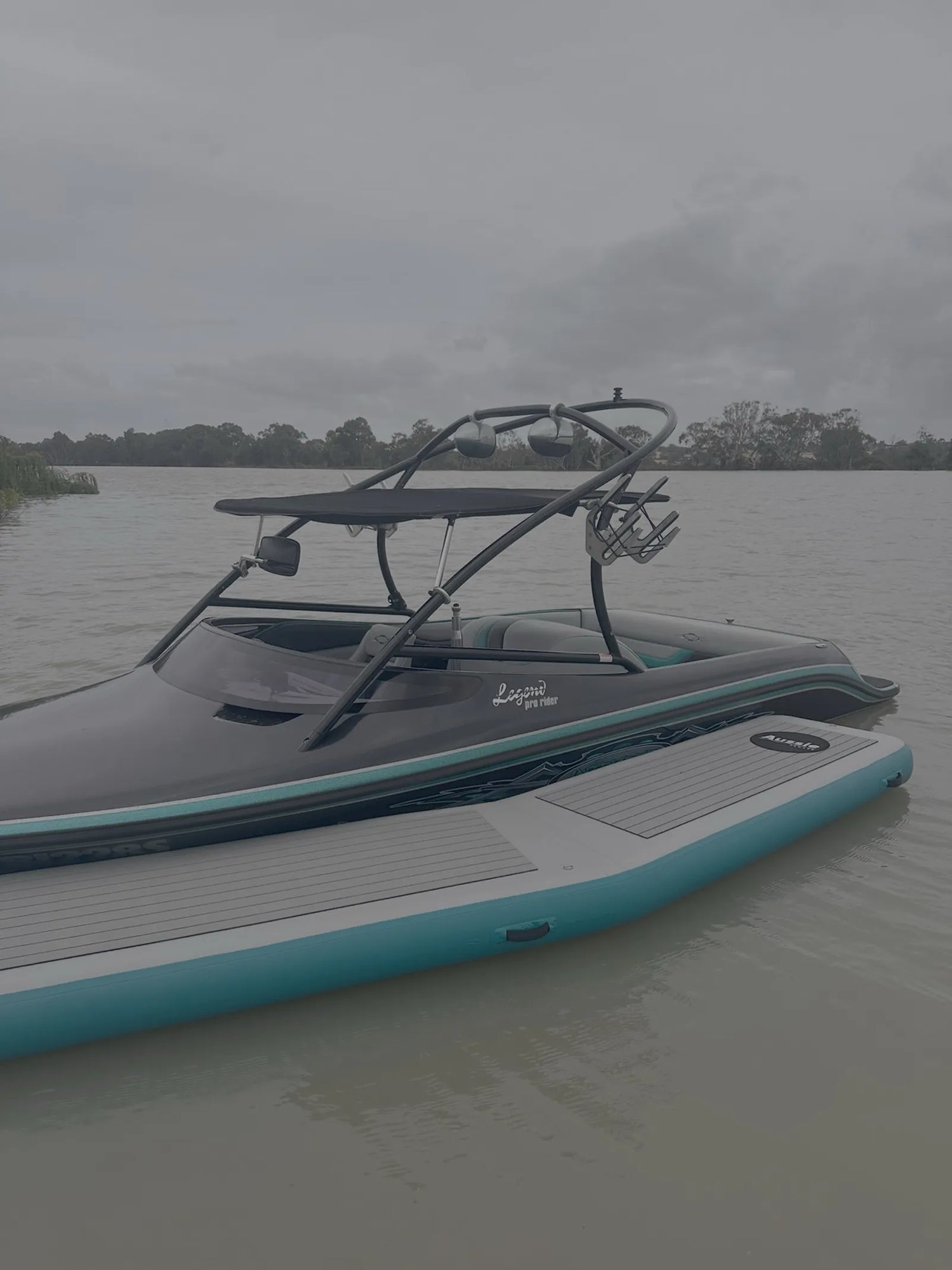
G'day, legend! If you’ve just treated yourself to an inflatable boat pontoon, congratulations. You’ve officially upgraded from a "person with a boat" to the "absolute legend with the floating island." Whether you’re tied up at the shack, drifting on the Murray, or anchored in a quiet cove on the coast, your Aussie Floats platform is about to become the headquarters for every snag, cold drink, and cannonball this summer.
But here’s the thing: nobody wants to look out from the veranda and see their brand-new floating boat dock drifting solo toward New Zealand because the tide turned or the wind picked up.
Securing your inflatable platform isn't rocket science, but there is a bit of an art to it. In this edition of the Aussie Floats Boat Buddy Inspired Series, we’re going to teach you how to "stay put" like a pro. Grab a cuppa (or a tinny), and let's get into it.
Why "She’ll Be Right" Isn't an Anchor Strategy
We Aussies love a bit of "she’ll be right," but when it comes to boat mooring solutions, she actually won't be right if your pontoon isn't tethered properly. Inflatable docks are incredibly buoyant and have a surprisingly large surface area. This means they can act like a giant sail in a stiff breeze or a wandering sheep in a strong river current.
A properly secured platform means:
- Safety first: No one likes trying to step onto a dock that’s sliding away from the boat.
- Investment protection: You’ve invested in quality; let's keep it from scraping against rocks or jetty pylons.
- Peace of mind: You can actually relax in your camp chair without checking the horizon every five minutes.
The Hardware: Your Toolkit for Stability
Before you hit the water, you need the right gear. Think of this as the "insurance policy" for your afternoon of relaxation.
1. The D-Rings (The Unsung Heroes)
Every Aussie Floats platform, from our Board Walk Series to the vibrant Custom Coloured Series, comes equipped with heavy-duty stainless steel D-rings. These are your primary attachment points. They are strategically placed to distribute load across the PVC, ensuring you don't put too much stress on any one spot.
2. Marine-Grade Rope
Don't just use that old bit of twine you found in the back of the ute. You want 3/8" to 1/2" nylon or polypropylene braided rope. It’s strong, it handles the sun (UV resistant), and it has a bit of "give" to absorb the shock of waves or wake from passing boats.
3. Anchors and Weights
Depending on where you are, you'll need:
- Fluke (Danforth) Anchors: Best for sandy or muddy bottoms. They dig in deep when pulled horizontally.
- Mushroom/Deadweight Anchors: Great for permanent setups or very calm water where you just need a vertical "sinker."
- Shore Stakes: If you're tying off to a bank, heavy-duty metal stakes (at least 18 inches) are your best friend.

Scenario A: The Riverbank or "Shack" Setup
This is the classic Aussie river experience. You’re at the shack, the BBQ is pre-heating, and the inflatable boat platform needs to sit flush against the bank or jetty.
The Pro Technique:
- The Shore Tie: Use your shore stakes or tie off to a sturdy tree or jetty pylon. Drive your stakes in at a 45-degree angle away from the water. This gives the best grip in the soil.
- The Offshore Stabiliser: Don't just tie the shore side. If the wind blows offshore, your dock will swing out like a gate. Drop a small anchor or weight from the outer corner D-rings. This keeps the platform tensioned and prevents it from "walking" up the bank with the wake.
- The Buffer: If you're tying up against a hard jetty, use some fenders or even pool noodles to keep the PVC from rubbing against splinters or barnacles.

Scenario B: The Open Water "Island" Mode
Sometimes you just want to be in the middle of the lake, away from the flies and the noise. This is where you create your own private island.
The Pro Technique:
- The Two-Point Minimum: Never use just one anchor. One anchor turns your platform into a spinning top. Use at least two anchors on opposite corners.
- The 45-Degree Rule: For maximum stability, your anchor lines should go out at an angle, not straight down. This is called "scope." A good rule of thumb is that the rope length should be about 3 to 5 times the depth of the water.
- The "Boat Buddy" System: If you’re mooring your boat to the platform, anchor the platform first, then tie the boat to the platform. Ensure the platform is the "heavy hitter" in the setup.
Connecting Multiple Pontoons: The Social Butterfly
Got a big crew? One of the best things about Aussie Floats is that they are modular. You can connect a Board Walk Series to a Custom Coloured Series and create a floating metropolis.
To connect them securely:
- Lash them tight: Use short, high-strength bungee cords or ropes between the D-rings of adjacent platforms.
- Flush Fit: Ensure they are inflated to the same PSI so the heights match. This prevents "tripping hazards" when people are walking between them.
- Unified Anchoring: When you have a massive surface area, you need more anchors. Think of it as one big unit and anchor the "corners" of the entire assembly.

Choosing Your Series: Board Walk vs. Custom Coloured
When you’re looking for the perfect inflatable boat platform, the choice usually comes down to style and use-case.
- The Board Walk Series: This is for the boater who wants that premium look. It features a stunning woodgrain finish that mimics a real timber deck but without the splinters or the maintenance. It looks incredible behind a high-end wake boat or attached to a houseboat deck.
- The Custom Coloured Series: Want to stand out? Or maybe you want a high-visibility colour for safety in busy waterways? This series allows you to pick a vibe that matches your boat or your personality.
Both series use the same military-grade drop-stitch technology, meaning they are rock-solid when inflated. You can literally stand on the edge without it tipping: try doing that with a cheap supermarket inflatable!
Pro Tips for the Aussie Boater
- Inflation is Key: A soft dock is a hard-to-secure dock. Use a high-pressure pump (like our electric ones) to get it to the recommended PSI. If it’s firm, the D-rings can do their job properly.
- Watch the Tide: If you’re in tidal waters, remember that your rope length needs to account for the water going up and down. Too tight, and your dock might get pulled under; too loose, and it’ll wander into the neighbour's yard.
- The "Bungee" Hack: Using a heavy-duty bungee tether between your rope and the D-ring can act as a shock absorber. This is a game-changer if you’re in an area with lots of boat wake.
- Rinse after use: Especially in salt water. A quick hose down keeps the D-rings shiny and the PVC supple for years of service.
Stay Put and Play On
Securing your inflatable boat platform doesn't have to be a chore. Once you've got your "Boat Buddy" system dialed in, it only takes a few minutes to set up and pack down.
At Aussie Floats, we live for these moments on the water. We’ve designed our gear to be tough enough for the rugged Australian sun and easy enough for a solo boater to handle. So, next time you're heading out, remember: anchor deep, tie tight, and enjoy the best seat in the house.
Ready to expand your floating empire? Check out our latest collections here and find your perfect water companion.